

Buried Lines That Connect Without Leaking
Select Excavation installs and replaces water and sewer service lines in Rockingham and Strafford County.
When your water service line cracks or your sewer connection backs up, you lose water pressure, deal with slow drains, or find wet spots forming in your yard. Older lines corrode, tree roots break through joints, and shifting soil causes sags that trap waste. In Salem and Chester, NH, many homes still have original galvanized or clay lines that were not built to last this long.
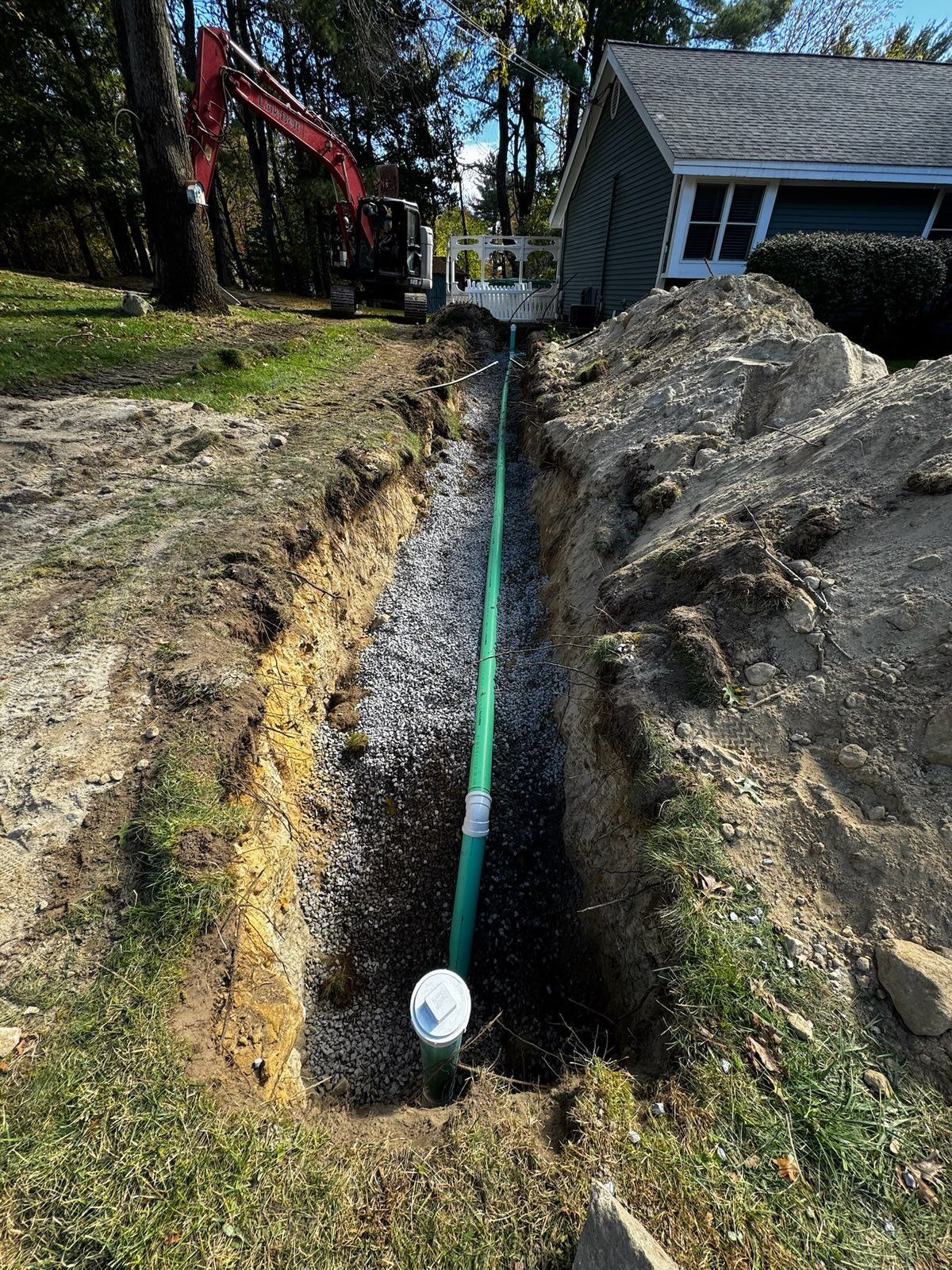
Select Excavation installs and replaces water and sewer service lines for residential and commercial properties. The work includes trenching from your building to the street connection, setting new pipe at the correct grade, backfilling with compacted material, and restoring surface grades. All installations meet local and state standards and are completed to minimize disruption to driveways, lawns, and landscaping.
If your service line needs replacement or you are building new, contact Select Excavation to review your project and schedule the work.
How Trenching Turns Into a Sealed Connection
The crew uses excavation equipment to dig a trench from your foundation or basement to the municipal tie-in or septic tank. Trench depth depends on frost line requirements and the elevation of the existing connection. New pipe is laid at a consistent slope to prevent standing water in sewer lines or air pockets in water lines.
After the line is installed and inspected, your water pressure returns to normal, drains empty quickly, and there are no more wet patches over the line path. The trench is backfilled in layers and compacted to prevent settling under driveways or walkways.
Work is performed to meet code requirements in Sandown, Chester, NH, and across Rockingham and Strafford County, NH. The timeline depends on trench length, surface obstacles, and whether the connection requires coordination with the water district or town sewer department. Lawn restoration is completed after backfill settles, and any pavement cuts are patched or scheduled with the municipality.
Here Is What Homeowners Usually Want to Know
Because this work involves digging across your property and tying into public or private systems, most people have similar concerns before they agree to start.
Select Excavation has installed and replaced service lines across Rockingham and Stafford County and knows how to handle varying terrain, connection types, and municipal requirements. If you need a line replaced or installed in Salem or Chester, NH, reach out to talk through your project and get it scheduled.
Water & Sewer Line Questions
What's the difference between water lines and sewer lines?
Water lines carry clean, pressurized water into a building, while sewer lines carry wastewater away to a septic system or municipal treatment. Each requires different materials, depth, and installation standards.
Do you need permits for sewer line installation?
Yes. Sewer line installation typically requires permits and inspections to comply with local and state regulations. We coordinate all required inspections and documentation throughout Rockingham and Strafford County.
What if the sewer trench crosses my driveway?
We dig through the driveway, install the line, and compact backfill in layers before patching asphalt or concrete. A temporary alternate route may be needed during the work. We minimize disruption to your property throughout.
Why do old sewer lines sag or break over time?
Clay and cast iron pipes crack under soil movement, and joints separate as ground shifts. Tree roots grow into the cracks and cause blockages. Replacing aging lines with modern materials prevents recurring failures.
How deep must water lines be buried in New Hampshire?
Water lines in New Hampshire are typically buried four feet or deeper to stay below the frost line and prevent freezing. Sewer lines follow a slope requirement and may vary in depth based on connection elevation.